
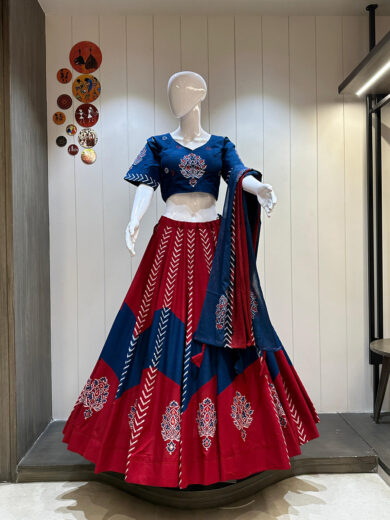
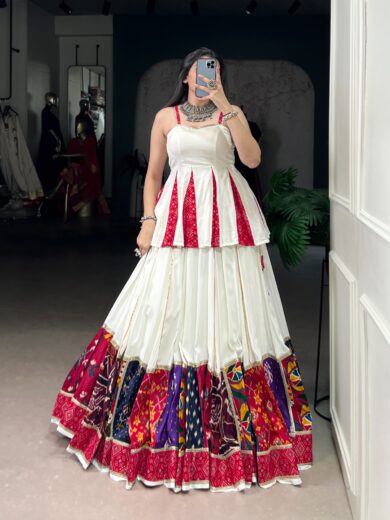
Handwoven Sarees Of Gujarat: Kutch Handloom & Embroidered Elegance
When it comes to India’s vibrant textile traditions, Gujarat holds a special place. From its sun-soaked deserts to the colorful lanes of Kutch, this region has nurtured generations of skilled artisans who transform threads into timeless beauty. Among its many treasures, the handwoven sarees of Gujarat stand out for their intricate craftsmanship, deep cultural roots, and unmatched charm. Let’s explore the world of Kutch handloom sarees, the artistry behind them, and the exquisite embroidery that brings each piece to life.
The Legacy of Gujarat’s Handwoven Sarees
The art of handloom weaving in Gujarat dates back centuries. It evolved not only as a means of livelihood but as a celebration of identity and culture. Each weave carries a story — of communities, colors, and traditions passed down through generations.
From the elegant Patola sarees of Patan to the Ajrakh prints of Kutch, Gujarat’s textile landscape is a vibrant tapestry of techniques, textures, and tales. These sarees are more than garments; they are wearable pieces of heritage, representing the state’s artistic diversity.
Kutch – The Heart of Handloom Artistry
The Kutch region in western Gujarat is a living museum of textile craftsmanship. Despite its arid landscape, it thrives with color, creativity, and culture.
Here, artisans weave dreams on looms — using natural fibers, earthy dyes, and patterns inspired by nature and local folklore.
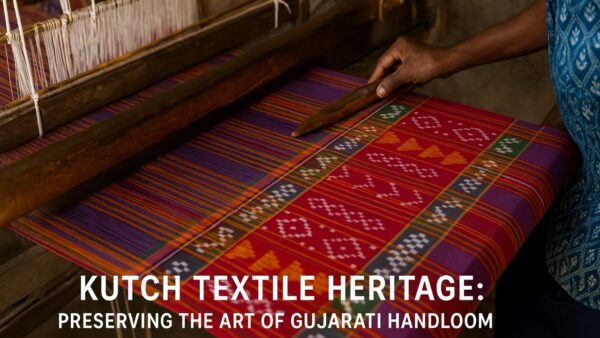
Kutch is renowned for two things: handloom weaving and traditional embroidery. The weavers, known as Vankars, create handwoven sarees that reflect both durability and grace. Using cotton and silk threads, they produce unique textures that feel soft yet structured, perfect for all seasons.
The hallmark of Kutch handloom sarees is their geometric motifs, striking borders, and the rhythmic play of vibrant hues. Each saree is meticulously crafted, taking days or even weeks to complete, depending on the complexity of the design.
The Art of Bandhani and Ajrakh in Sarees
No discussion of Gujarati sarees is complete without mentioning Bandhani and Ajrakh — two iconic textile crafts that often adorn Kutch handwoven fabrics.
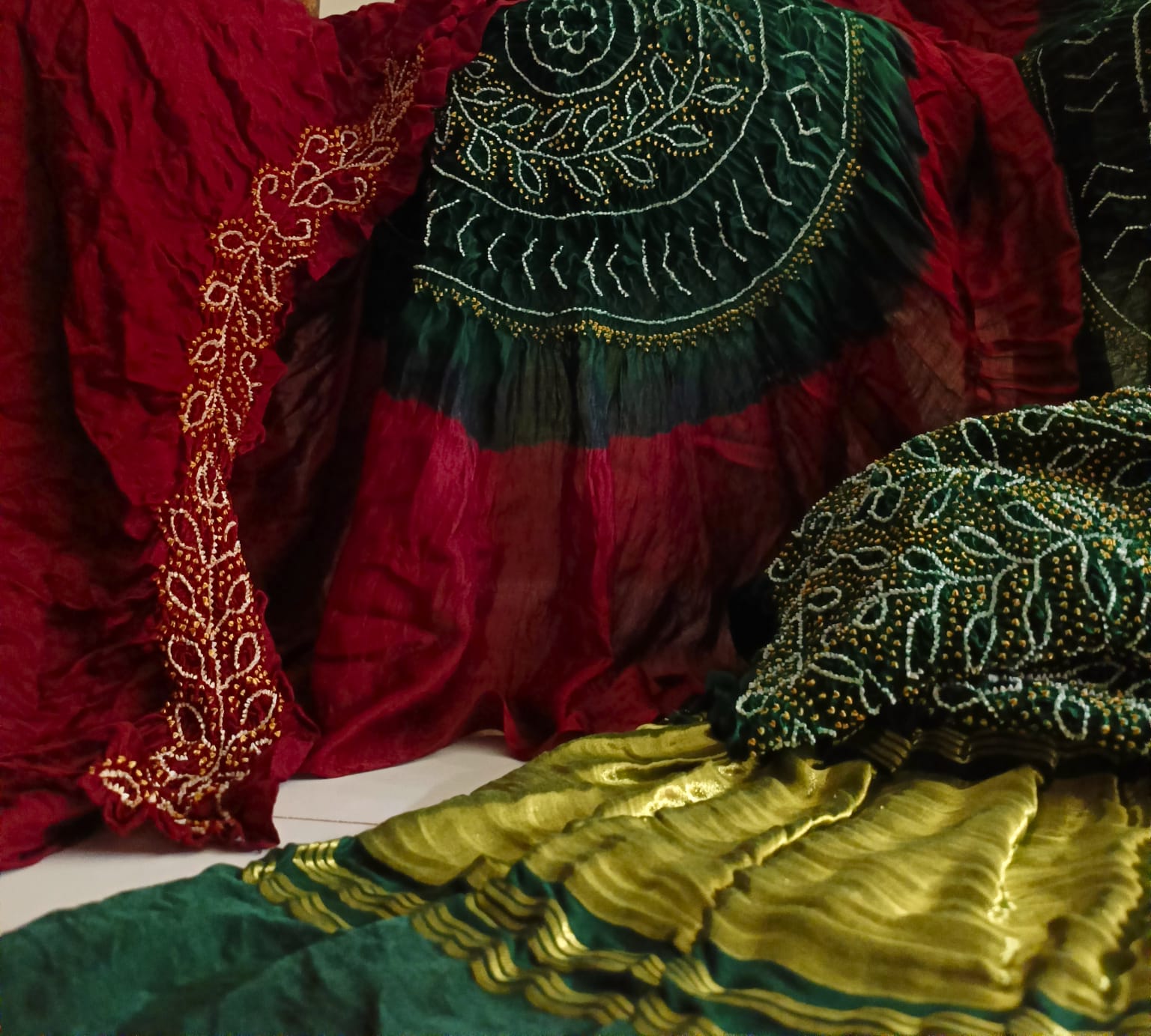
Bandhani, also known as tie-and-dye, involves tying thousands of tiny knots on the fabric before dyeing it. Once the knots are untied, beautiful circular or wave-like patterns appear, symbolizing auspiciousness and joy. Bandhani sarees are popular across Gujarat for festive and wedding occasions.
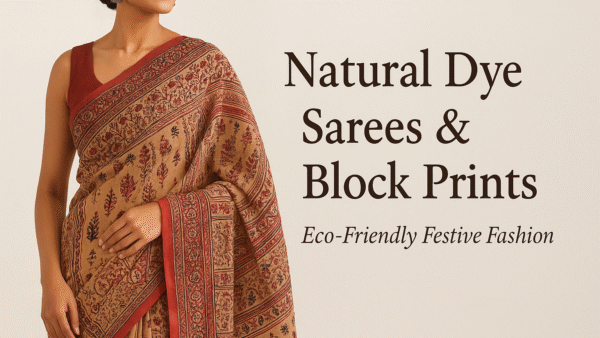
On the other hand, Ajrakh printing is a more intricate process that combines block printing with natural dyeing. Artisans use hand-carved wooden blocks dipped in eco-friendly dyes made from indigo, madder root, and turmeric. The result is a saree with mesmerizing symmetry, earthy tones, and motifs inspired by stars, flowers, and geometry — a true reflection of desert aesthetics.
Kutch Embroidery – Threads of Tradition
If weaving gives the saree its soul, embroidery gives it expression. Kutch embroidery is one of the most admired forms of decorative art in India.
Originating from the local Rabari, Ahir, and Meghwal communities, this embroidery style uses vibrant threads, tiny mirrors, beads, and shells to create elaborate patterns.
Each embroidered saree tells a story — often inspired by daily life, festivals, and nature. The use of mirror work, locally called ‘Abhla Bharat’, adds a sparkling charm that beautifully complements the handwoven base. Today, Kutch embroidery is recognized globally for its intricate beauty and artistic depth.
Sustainability and the Handloom Revival
In today’s fast-paced fashion world, handwoven sarees offer something rare — sustainability and authenticity. Unlike machine-made fabrics, every Kutch saree is crafted slowly, consciously, and with minimal environmental impact.
Artisans rely on natural dyes, organic fibers, and traditional tools, making each piece eco-friendly and ethically produced. By choosing a handloom saree from Gujarat, you’re not just buying fabric — you’re supporting a legacy of craftsmanship and helping rural artisans sustain their livelihoods.
Many contemporary designers and brands are now collaborating with Kutch weavers to create modern sarees with traditional essence. This fusion has brought new life to ancient crafts, making them relevant for today’s generation while preserving their roots.
How to Style and Care for Your Handwoven Saree
A Kutch handwoven saree can easily become a statement piece in your wardrobe. Pair it with silver or oxidized jewelry to highlight its traditional charm, or style it with a minimalist blouse for a modern touch.
These sarees are versatile — perfect for festive occasions, weddings, or even as elegant office wear.
To maintain their beauty, always:
- Hand wash in mild detergent or dry clean.
- Avoid direct sunlight for drying.
- Store in a cotton cloth to let the fabric breathe.
With proper care, a handwoven saree can last for decades — often passed down as a family heirloom.
Conclusion
The handwoven sarees of Gujarat, especially from Kutch, are a true reflection of India’s rich textile heritage — where every weave, dye, and stitch carries generations of wisdom and artistry.
From the mesmerizing patterns of Bandhani to the earthy tones of Ajrakh and the glittering stitches of Kutch embroidery, these sarees embody the essence of handmade luxury.
When you drape a Kutch handloom saree, you’re not just wearing fabric — you’re wearing a story, a tradition, and a piece of art that connects you to India’s cultural soul.
So the next time you think of timeless elegance, let a handwoven saree from Gujarat remind you that beauty lies in the hands that weave dreams into threads.


Leave a comment